Showing posts with label Entrepreneurship. Show all posts

Thursday, September 15, 2016

Is it an izzit day? by Elizabeth Harris

What do you read when you have no books and a high-school classroom full of struggling readers?

Nearly a decade ago I had to answer that very question as I began a new chapter in my career – teaching English and Academic Literacy at MacArthur High School in San Antonio, Texas. During the interview process, my principal challenged me both professionally and personally. She explained that my classes would be full of students who need a teacher to see beyond their well-documented disabilities and challenges. Enthusiasm for what you are teaching and respect for the students must be displayed every day. You must believe in them even when they don’t believe in themselves. Can you do that while teaching students who are struggling or resistant learners?

Challenge accepted.

The first week of school brought another challenge that I had not anticipated. My classroom was nearly empty. A few desks and small tables were scattered amidst four white walls, but there was not a single book in the classroom. No books, no bookshelves, not even a filing cabinet.

My search for high-interest, expository texts or current event-based materials began immediately.

During this time, I discovered izzit.org. I was thrilled to find an organization dedicated to providing quality teaching materials. Although the emphasis of the materials is primarily in the economic or government and business realm, the topics readily lend themselves to cross-curricular learning experiences.

In my Academic Literacy classroom, From Poop to Profits becomes a lesson about problem solving, innovation, and overcoming obstacles.

Bee the Change becomes a lesson about learning to take risks in the face of hardship, and the importance of being committed to follow through in order to effect change for your family and community.

Paradox of Progress becomes a lesson about facing change. When is change good? When is technology enough? Or too much? Who decides?

The Singing Revolution becomes a lesson about individual acts of heroism, the power of choice, and the resilience of the human spirit.

Each engaging izzit.org video depicts real people facing real challenges and demonstrates the importance of perseverance and individual choice. My students cheer whenever they see the izzit.org icon. “Is it an izzit day?” is a favorite question.


Whether teaching my struggling readers, students with learning disabilities, or second language learners, izzit.org provides excellent educational resources for teachers that can easily be adapted to teaching any level of secondary students. Teacher guides coupled with quality films and documentaries depicting real world situations provide students with authentic learning opportunities that extend beyond the classroom walls. In my classroom, videos frequently serve as springboards for student-driven, inquiry-based research projects. This type of learning promotes critical thinking, problem solving, and higher level processing as well as collaboration.

Several years ago after reading a current event article from izzit.org titled “Kidneys for Sale”, even my most apathetic student had an opinion. We paired this with a similar article and then viewed a segment of the video from the Drew Carey Project: Vol. 1. My students were engaged and did not stop talking about this topic even as we were ready to move on. So, I changed my lesson plans. Students continued generating meaningful questions and talking with their parents outside of class – about organ donors and organ transplants.
Their momentum carried us from learning about how to become an organ donor to learning which other organs can be successfully transplanted. As students questioned, we expanded our research. The culminating effect that year is that students began to learn why some people need organ donations. And they wanted to do something to help. One young lady challenged her family to begin eating more vegetables and become healthier so that they won’t need organ transplants. Others decided to raise awareness about how to become an organ donor.

Momentum continued and one final project brought all of my classes together in a collaborative effort. Students’ inquiry-based research led them to learn about several diseases such as cystic fibrosis, diabetes, and Duchenne Muscular Dystrophy (DMD). When students read an article about a young boy with DMD and learned it is a fatal childhood disease that affects boys, they wanted to do something. Their ideas flowed.

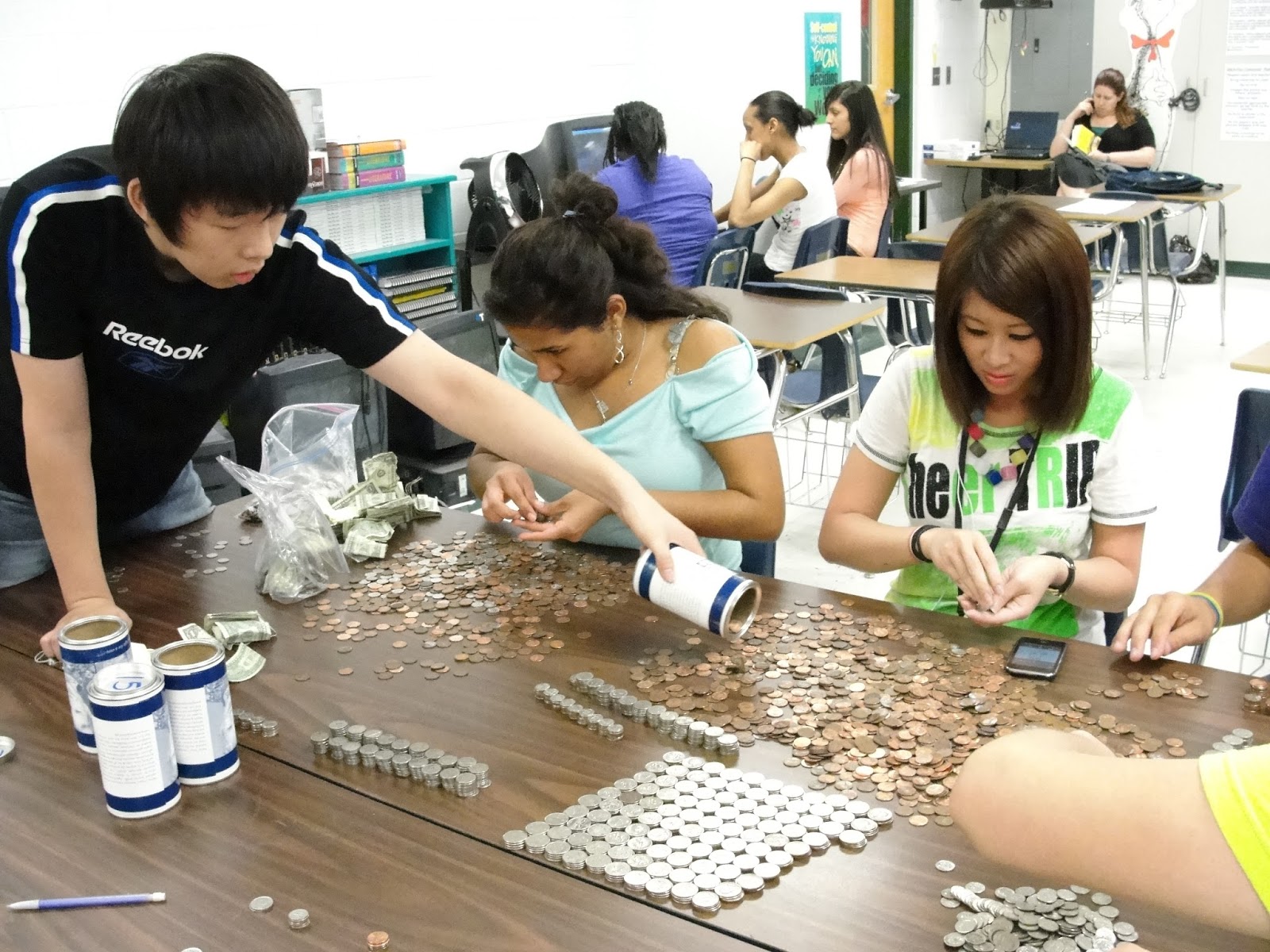
Students planned, developed, and carried out several events on campus and in the community to raise $1,500.00 dollars toward research for finding a cure. Through a grant proposal, students published a calendar outlining their journey and continuing efforts to raise awareness for their cause. Calendars were sent to principals, counselors, and librarians at each middle school and high school campus in our district.

Instead of focusing on their own challenges, this project provided a platform for students to realize their potential and celebrate their ability to impact the world around them. Participation at this level is empowering.

Curriculums may change and textbooks will come and go, but izzit.org current event updates and educational videos remain a constant in my classroom because they provide opportunities for students to grow and learn together

Monday, August 1, 2016

Lessons from Rwanda: Preconditions for Prosperity By Casey C. Fleming

I will never forget how good it felt to earn my first paycheck as a teacher. After four years subsisting on New Orleans’ Po Boys, I could finally afford to enjoy the finer things. But I overdid it. I spent every last cent furnishing a new apartment, buying new clothes and treating my friends. I even applied for a few credit cards. I could afford it, I thought. When the bills started pouring in, I quickly realized I needed to change my habits and I turned to the Internet to look for savings strategies.

I stumbled on izzit.org. There I found an abundance of resources aimed at teaching students economic principles, fiscal responsibility and entrepreneurship. Realizing that the disadvantaged students I worked with could also benefit from these lessons, I decided to integrate izzit.org materials into my curriculum. I ordered the DVD Victoria’s Chance, a video about the education of a young Ghanaian, and I challenged my students to think about real poverty. And so it began. Together we explored budgeting, free markets, and entrepreneurship all while learning grammar and composition.

My newfound passion for integrating enterprise-based solutions to poverty in the classroom led me to apply for a teaching fellowship with the Social Equity Venture Fund, or SEVEN, to travel to Rwanda to discuss, observe, and learn about how Rwanda’s leaders were also integrating such lessons in their own classrooms and economy. The following is a reflection on what I learned during my visit.

Michael Fairbanks, SEVEN’s co-founder, has laid out five “preconditions” that must be satisfied for emerging nations to improve their global competitiveness: leadership, moral purpose, tension, receptivity to change, and insight. Do Rwandans satisfy these five conditions? And do I? By relating each precondition to a personal experience of mine during the trip, I hoped to answer these questions.

Leadership—When one thinks of leadership in Rwanda, he or she can most likely not help but to first think of his Excellency, President Kagame. In Rwanda, individuals assigned to positions of leadership are held accountable through the ancient cultural tradition of signing an imihigo. An imihigo is a cultural practice in which an individual appointed to a position of leadership sets targets to be achieved within a specific period of time. If such an individual fails to meet the targets laid out in the contract, or to keep promises made during the course of a political campaign, that person is relieved of his position. Leaders are thus held accountable for their actions and their promises. I can only dream of what America might look like if we conducted our political process in a similar manner. In my own career as an educator, I have adopted this accountability measure to set goals for myself and my students while working at a New York City charter school.

Moral purpose—Writer and native African Eric Kacou defined moral purpose as a compelling aspiration that ignites the desire for change. I witnessed such moral purpose in Rwanda during my time spent with a conservationist from the Dian Fossey Foundation prior to a gorilla trek in the Virunga Mountains. Rwandans are committed not only to enacting policies that promote economic growth, but also to the conservation of its most extraordinary natural resources—like the majestic silverback gorilla. Listening to our guide discuss Rwanda’s approach to conservationism through eco-tourism convinced me this was an issue close to Rwandans’ hearts. Moral purpose is firmly established in the country’s approach to protecting its ecology which also allows for competitiveness in the eco-tourism industry.

Tension, in the context of economic reform, is the third precondition for national success. Tension refers to a sense of urgency triggered by a situation that has become unsustainable.  Undoubtedly, the tribal genocide of 1994 catalyzed the sense of urgency that has transformed Rwanda’s national identity. Some of my counterparts on this trip have suggested this event was a necessary evil for Rwanda to undergo the amazing transformation that has taken place since. One can only speculate. However, when I reflect on my time in Rwanda – and all of the extraordinary people I met while I was there – I can only be saddened by the thought of all those lost souls who might have contributed to Rwanda’s renaissance. What is more inspiring than the sense of urgency that exists in Rwanda is the people’s capacity to forgive and to unite.

Receptivity—The fourth precondition, receptivity, indicates willingness to listen to new ideas and embrace change. Nowhere was this receptivity more apparent than in the bright-eyed enthusiasm of Rwanda’s children. In my time as an educator, I have never had the pleasure of working with a group of children as eager to learn. I could not help but think back to my students in the U.S., many of whom are so easily discouraged and so eager to plug in their headphones. And yet here, in this classroom with makeshift desks, I witnessed a room full of attentive students waving hands in the air. They were eager to be called on. They yearned to be challenged. I was as fascinated with their thirst for knowledge as they were with my red hair and blue eyes. In the face of poverty and uncertainty, it is clear that these children are filled with optimism. While working with the students, I perceived a healthy balance of national identity and cultural pride coupled with a desire for western knowledge, modernity, and technology. The children of Rwanda possess receptivity in spades.

Insight—The final precondition is insight. In this context, insight refers to the knowledge required to make informed strategic choices. I had the privilege of meeting with many successful Rwandan
businessmen, economists, and entrepreneurs during my visit. A recurring concept that each speaker stressed was just how imperative it is that the people of Rwanda invest in themselves and begin to generate their own wealth. Overwhelmingly, they want to resist outside sources of foreign aid, often called “dead aid” due to its tendency to corrupt and create dependence. Yet I was encouraged to see how willing Rwandan leadership is to seek advice from outsiders when it comes to economic affairs. Based on what I observed, it is my belief that Rwanda’s greatest economic insight comes from its willingness to benefit from the wealth of knowledge available around the world.

As a young teacher, one of the most difficult lessons I had to learn was to seek advice from more experienced teachers; for acknowledging what one doesn’t know is more important than relying on what one does know. When making strategic choices concerning economic policies, leaders must keep in mind that the choices they make will affect the standard of living for years to come. Likewise, my decisions as a teacher will affect the academic achievement of my students for years to come.


What I have taken home from Rwanda is the fact that the five preconditions I set out with as mere concepts are already deeply embedded in their culture. The Rwandan people have inspired me to become a better leader, driven by my students’ needs; to search for moral purpose; to be cognizant of tension in order to impart a sense of urgency in the classroom; and lastly, to become a catalyst for change. I will be more receptive to different cultures and new ideas and will embrace these cultures and ideas with an open mind. I will continue to turn to others to benefit from their wealth of experience in order to make more informed decisions regarding the strategies that will ultimately shape the lives of my students. I will do all of these things for one very simple reason: If an entire nation is capable of undergoing such a profound transformation, there is absolutely no excuse for an individual like me not to do so as well.

Thursday, April 7, 2016

No Longer OutCastes - Another New Release


As seen on public television!!

In India, those born into the lowest caste are breaking barriers! Find out how by watching our new video.


No Longer OutCastes is available for immediate downloading or streaming from www.izzit.org! You can also stream this program from our YouTube channel, Vimeo channel and Roku channel (internet connection and Roku streaming devices are necessary).

Friday, July 24, 2015

What's the Secret Recipe for Success???

"Recipe for Success" covers several teaching subjects such as:


Business / Family & 
Consumer Science
■ Economics 
■ World History / Geography


Sylvia Banda knows the secret to success. She's taken her passion for food and cooking turning it into one of the strongest food service corporations in the African Republic of Zambia.

She started by making fritters to sell to her classmates, then opened her own restaurant after college. On opening day, she realized there was more to running a food business than just cooking - she'd forgotten to have chairs for her customers! She bartered with a neighbor for chairs and eventually became a successful food entrepreneur who's helping other Zambians improve their lives.

Changes in economic policies made the difference for Sylvia and other Zambians. What kinds of changes could explain the rise from one of the lowest ranked countries on the Economic Freedom Index to being equal to Poland and France in just 15 years?

Find out....as Sylvia shares her "secret" recipe for success.


Teachers and homeschoolers can click here to sign up for their FREE izzit.org membership. Make sure you stay tuned for new membership options coming this fall!!

econlife - Who Will Sacrifice Civil Liberties During a Pandemic? by Elaine Schwartz

  In a new NBER paper, a group of Harvard and Stanford scholars investigated how much of our civil liberties we would trade for better heal...