Showing posts with label Teacher. Show all posts

Tuesday, January 30, 2018

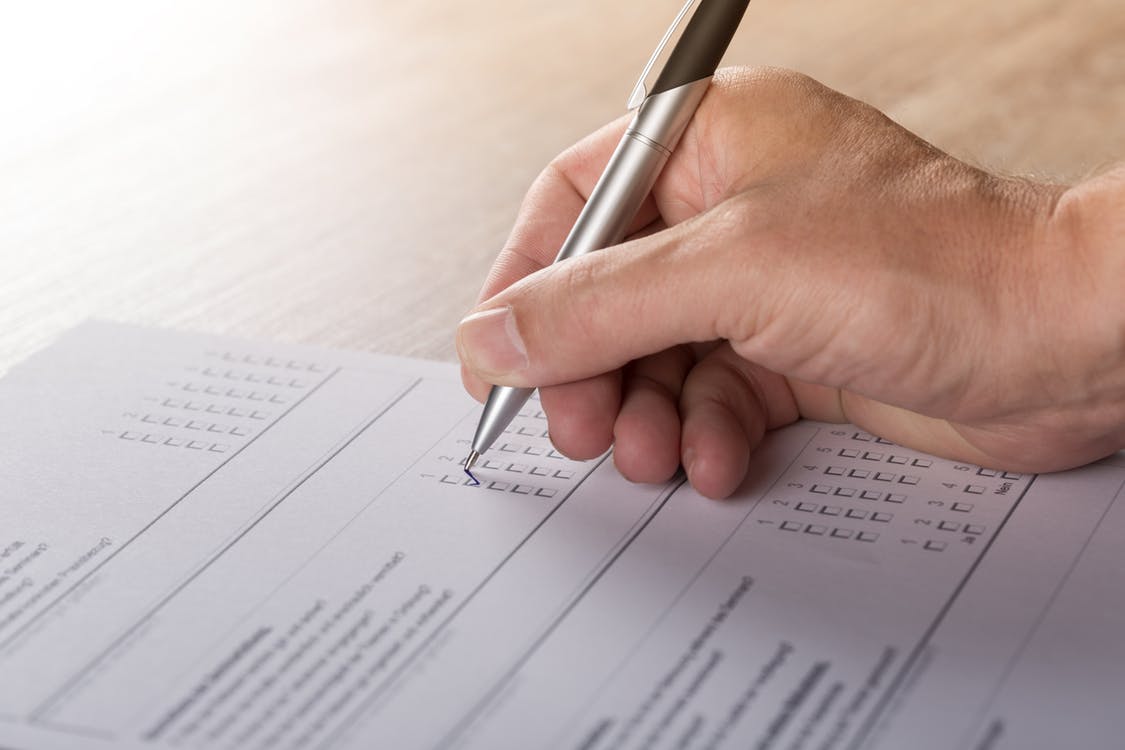
Too Much Testing by Mike Siekkinen

Testing today is a hot topic, with recent legislation passed on the federal level to reduce the number of standardized tests given to students. Most states are even jumping on this, also reducing state and local testing. So with reduced testing, how can a teacher measure concretely that students are "getting" what they are supposed to "get?”

Remember that determining what a student has or hasn't learned does not need to be only assessed with a multiple choice test. There are many other options available to check on learning, such as:

  • have students write about what they have learned. They can even make it a story. Many students love to write, so let them!
  • have students "draw" about what they have learned. I often have students do this in the form of a comic strip. They make the picture and write captions for what is occurring in their comic.
  • write a speech as that person explaining how they feel about modern times or put them in a situation and have them write as this person would write.
  • do a poll or survey to see if whole class understanding is occurring or if you need to spend more time on an area. 
  • use personal white or chalk boards, or even sheets of paper. Have students respond during the lesson by holding up their board/paper.
  • quick quiz - no more than 5-10 quick questions as students leave your class to see if they "got it.”
  • think of something of your own. These are just some things I do rather than the formal pen and paper assessment. Students often don't even see these as "test.” So come up with your own methods to stay away from those "standardized tests.”


How else do you assess for understanding? Share your ideas with us.


Dr. Mike Siekkinen, a retired U.S. Navy submariner, became a teacher as a second career. He teaches history at St Marys Middle School as well as Adult and Career Education at Valdosta State in Georgia.

Wednesday, November 22, 2017

Attention to Detail by Andy Jobson

Working at a military academy brings its own set of priorities.  Our literature promotes the JROTC program as a structural support for academic success, and in many ways that is true, despite occasional conflicts between military and academic goals. 

One element that I have grown to appreciate more over the years is the emphasis on attention to detail.  For a JROTC officer, that entails making sure your gig line is straight, your insignia is correct, your shoes are shined, and your room is “squared away.”  As a teacher, I emphasize the same thing in different ways.  Have you followed the directions as written?  Have you produced neat work?  Have you paid attention to margins and the heading I require?  Are you using punctuation appropriately?

Sometimes the boys get frustrated with my demands.  I work with eighth- through twelfth-graders, and like many teenage boys, they tend to overlook ‘minor’ details.  (How many times have my own boys at home simply not ‘seen’ the piles of clothes and toys in their room?)  There was a time in my educational journey where I might have been willing to forgive such niceties; did it really matter if the boys used the heading I suggested or something else?  The older I get, though, the more I find myself insisting that the boys pay attention to my expectations and meet them.

I think I resisted some of this because I didn’t like the ‘factory’ model, where we were training our boys to be laborers under the industrial system.  The ‘new education,’ we were told, was to prepare students to be critical thinkers, not clock-punchers and automatons.  I agree that critical thinking and independence is vital (hence my association with izzit!), but I also see that paying attention to the directions is a vital skill for success.  Can you say “tax returns”?


If all I’ve done is to train my boys to follow directions, I have failed.  At the same time, though, if I haven’t trained them to read and follow directions, including MLA citation format and the works, then I think I have also failed.  Details matter.


An educator of 22 years, Andy Jobson has taught government, economics, and U.S. History. Currently teaching English literature at Riverside Military Academy in Gainesville, GA, he’s also been an administrator, a STAR teacher twice, and taught elementary school with Teach for America.

Thursday, October 19, 2017

My Top Three Educational Sites for Middle School Social Studies by Mike Siekkinen

Brainpop.com- very reasonable pricing for a school license. Fun, fast and informative website for history, geography, economics and culture. I use the site to supplement my classroom instruction. Students receive a login and password and then go to the topic I assign. I have students view the video that is with each topic and then explore the area. There are games and activities associated with each of the topics as well as a quiz on the subject matter. I have my students email the results or take a screen shot of the final results. I place an 80% or higher requirement on students and they are allowed to retake the quizzes until passing grades are obtained. Site is fun and middle schoolers are not to “old” for cartoons!


Icivics.org- awesome free website on government and politics. Lots of games that are fun and educational. Also many levels, so this site can work for all ages. Games are interactive and are great to use when teaching government. Website has the endorsement and a founder of none other than Sandra Day O’Connor. Lots of fun and you sneak learning in. My students really enjoy this site.

Freedomflix.com- interactive online textbook that is great for teaching civics and history. Very reasonably priced for a site license. I design web quests for my students. Each lesson has a video, interactive text with vocabulary and includes maps, timelines and pictures. Really great site that I use weekly. My students are always on a web quest supplementing my classroom instruction. I assign students web quests in Google classroom where they have options for submission of my web quest information to allow for differentiation.


Dr. Mike Siekkinen, a retired U.S. Navy submariner, became a teacher as a second career. He teaches history at St Marys Middle School as well as Adult and Career Education at Valdosta State in Georgia.

Tuesday, October 10, 2017

Fall Wall by Alicia Stansell


Loving what you do is sometimes easier said than done. As a teacher my heart rejoices when a student reaches understanding of a difficult concept or when a student gets excited about coming to class. During late Fall though it is all too common place to fall on the other side of love, the painful side where circumstances try to convince you that you do not love your job. You put your heart, soul, emotions, and sometimes well being into the job, and wonder if you are making a difference. Seeing growth in student’s takes time, and burn out is high in the teaching profession. It is important to focus on the little milestones. The day to day has many joys and much heartache, so it is all about staying focused on the good you are making in the classroom. Actively seek out the things that made you choose teaching and try to block out the rest. 


Teaching in late Fall is much like swimming to a distant shore. The paperwork, the e-mails, and low grades can create an ocean so deep and vast that you feel alone without hope of survival. You feel your muscles fatigue and contemplate giving up. The more you swim and use those muscles, the greater the pain sometimes feels. Sometimes you just have to lay back, relax, and take a deep breath while watching the clear blue sky. Doing so allows you to float while you recharge those aching muscles so you can find your inner calm. Once your strength is back you can regain your treading towards the shore that will eventually come. Find the good in the day-to-day, search for the clam, and do not be afraid to let yourself relax so you can come back stronger the next day or the next week. 

Give yourself a break so you can keep loving what you do, even when times are hard.


Alicia is in her 8th year of teaching STEM contents with public schools. She believes in the power of education to improve peoples lives. 

Tuesday, August 15, 2017

Things to Discuss on the First Day of School by Mike Siekkinen

The first day of school is often a busy, scary and sometimes disorganized event, especially for new students (and teachers). Having a list of items to discuss with your students can help keep you organized and in control. Having a list also ensures that students will get the required information about school rules, times and class conduct. Here is my list for the first day. This can be modified to fit your individual circumstances. Hopefully you find this useful.
  • Gum/snacks/ food
  • Trash (where and when)
  • No clock (I don’t use one in my class)
  • Entering procedures/ exiting procedures
  • Lunch (time and prices)
  • Weekly schedule
  • Text books
  • Upcoming events
  • Cell phones
  • Field trips
  • Buses
  • Agendas and hall passes
  • Required supplies
  • Chromebook use/misuse
  • Fire drill procedures/ intruder drills
  • My desk/ your supplies
  • Classroom temp.
  • Substitute teachers (how to act)
  • Restroom breaks
  • Late work/ due dates
  • Class binders
  • Homework
  • Turning in work (where and how)

Dr. Mike Siekkinen, a retired U.S. Navy submariner, became a teacher as a second career. He teaches history at St Marys Middle School as well as Adult and Career Education at Valdosta State in Georgia.


Monday, June 19, 2017

Evaluations by Andy Jobson

It’s that time of year again.  As a department chair, I am tasked with providing an assessment of each member of the English faculty, noting a variety of issues as “excellent,” “proficient,” or “needs improvement.”  It’s a challenging task.  For one thing, I don’t get to spend very much time in their classrooms, as I stay quite busy with my own students and planning.  For another, I recognize that we are all on a spectrum of ability… where does ‘proficient’ become ‘excellent’ (defined as “it would be difficult to do any better”)?  Don’t we always think we can do something better?  I want to praise my teachers, yet I know that I also need to prod them to strive for more.  At our private academy, there is no room for mediocrity.

I also know that if I mark too many items as “needs improvement,” I can crush a younger teacher’s spirit, creating self-doubt.  So finding that balance is tricky—I want to acknowledge the good, praise the great, and point out the not-so-good while encouraging him or her to see that there is hope for improvement.

Reflecting on my teacher evaluations makes me ponder whether I’m too cavalier sometimes in my student assessments.  Teenagers are, if anything, more sensitive than my teachers.  They need praise as well as guidance.  I have found rubrics can be very helpful in this regard, as with appropriate forethought I can identify several areas likely to receive praise as well as focusing on a few new content or skill areas to assess. 

One particular challenge in assessing student work is the short attention span they have for feedback; it’s not unusual for me to write all sorts of comments throughout an essay, only to watch the boys flip to the back and look at their ‘score,’ the grade, and be done.  I may stop putting the final number on the paper and make them read the material I’ve written to find the grade buried somewhere in the notes! 

An educator of 22 years, Andy Jobson has taught government, economics, and U.S. History. Currently teaching English literature at Riverside Military Academy in Gainesville, GA, he’s also been an administrator, a STAR teacher twice, and taught elementary school with Teach for America.

Wednesday, June 14, 2017

Top 5 Books to Try When You Have Time…. by Mike Siekkinen

Teachers have a ton of extra time on their hands…during the summer.

I thought I would share some of my favorite books and why I love them. Many are read by my students and give us things to discuss or can be recommendations also so here goes:

1. Lord of the Rings – I love this story. Complex world with its own language. Most kids have seen the movie but it’s nothing is like the original tale. The original fantasy novel to start the genre! You can add the Hobbit also as it is the front story.

2. The True Game – This is a series of 3 novels that make for a great read. Science fiction with a fantasy “kick.” Easy read with a neat world where people are born with “powers.” I almost envision these as pieces on a board battling it out. I’ve never read anything quite like it.

3. The Stand - Hands down the best of Stephen King! What a story! A disease wipes out humanity with a handful of survivors. Good versus evil! A supernatural twist thrown in for good measure. Characters you’ll love and hate. Awesome read!

4. Harry Potter - Don’t scoff! Yes,they are children’s books but they are also an enjoyable read! Great storytelling is great storytelling! You’ve seen the story but if you haven’t read it, you should. The book is always better than the movie!

5. Call of the Wild - Great classic read. Adventure and coming-of-age story. Not sure if this is required reading anymore but it should be. I also recommend for you “northerners” a similar book Trap lines North. Bygone era but I used to read this as winter rolled in before I started my own trap line. I used to trap mink and muskrat to get Christmas money to buy gifts for family. 


Give these a try. I think you’ll find some enjoyable reading!


Dr. Mike Siekkinen, a retired U.S. Navy submariner, became a teacher as a second career. He teaches history at St Marys Middle School as well as Adult and Career Education at Valdosta State in Georgia.


Thursday, April 13, 2017

Educational Field Trips by Mike Siekkinen

I love a good field trip! My students do also. The chance to leave school for the day and visit somewhere, anywhere, can be a really fun and educational time for students and teachers. I have been my school’s “field trip guy” for many years now. I take my classes (team) on field trips at least once a quarter. When I first started this many years ago, I was told this was difficult, dangerous and expensive. With proper planning and research, field trips are high points of the year for all of us.

First, choose a place that can relate to your curriculum. If you are a biology teacher this may be a national park, a zoo, or a museum. For history, look around your area for historical sites or perhaps even in your home town. Many of these sites can be free for educational groups or very reasonable. I use a local military base, local historical sites, state parks and also cultural celebrations in the local area. 

Most of my trips, I only have to pay for transportation. I fund my field trips (as my district has no funding for field trips) by student donations. I have also been blessed to receive the Target Field Trip Grant a number of years ($700 per year). My field trips are always linked to instruction. For instance, I visit Okefenokee State Wildlife refuge. I link this to standards we have to teach in science, history and we always include writing assignments and research before and after each field trip as well as we finds a way to work in mathematics. Most school systems have some procedure and required paperwork to do before going on a field trip. Ask your principal what the district’s policies are regarding trips. Mine is supportive though I have to find my own money. With good planning, field trips are a great way to get students and teachers out of the classroom to show students real life applications to what they learned at school!

Dr. Mike Siekkinen, a retired U.S. Navy submariner, became a teacher as a second career. He teaches history at St Marys Middle School as well as Adult and Career Education at Valdosta State in Georgia.

Thursday, March 30, 2017

From the Homeschool Front …Why Homeschool? by Colleen Hroncich

I never expected to homeschool my kids. Growing up, I only knew of one homeschooling family … and let’s just say they were considered a bit odd. My oldest was in 6th grade and my youngest was in kindergarten when we decided to make the switch. We had a bit of a bumpy start, but 5 years later we’re still at it. 

I love the freedom and flexibility that go along with homeschooling. We control our own schedules. We set our own school calendar. Learning is woven into every part of our lives, not relegated to “school” hours. When people hear I homeschool 4 kids, they frequently say that sounds stressful. Strangely, in many ways our lives are less stressful than when the kids were “in school.” No more packing lunches, hectic mornings trying to get to the bus stop, or chaotic nights trying to finish homework. 

One of the biggest benefits of homeschooling is that each child can work at his or her own pace – slowing down or speeding up depending on the material. This individualized pacing is difficult to replicate in the classroom, although technology is bringing more flexible options to “brick and mortar” schools, too. 

Educating our children at home also lets us expose them to many points of view. We want to raise critical thinkers – adults who see through talking points and challenge conventional wisdom. We don’t want parrots … even if they’re parroting our own ideas. This variety of viewpoints, and the freedom to question them, is essential to developing critical thinkers.

Homeschooling certainly has its challenges. I’m the teacher, disciplinarian, bus driver, scheduler, cafeteria worker, and more. The house is messier than it would be if they were at school all day. There is a lot of togetherness (which can be a pro or a con, depending on the day). But the benefits – to our family as a whole, to each child individually, and to us as parents – strongly outweigh the costs. 

Our kids know they can stop homeschooling if they want. The fact that they stick with it tells me I’m doing the right thing for them.


Colleen Hroncich loves that homeschooling allows her to learn right alongside her children. A published author and former policy analyst, Colleen’s favorite subjects are economics/public policy and history. She has been active in several homeschool co-ops and is a speech and debate coach.

Wednesday, August 17, 2016

Teaching – My Second Career by Mike Siekkinen

I became a teacher as a second career. As a retired military man, I had the opportunity to teach in the Navy on two separate shore duty assignments. I taught both enlisted and officers on subjects ranging from leadership, procedures to operate complex electronic systems and submarine navigation. Having enjoyed teaching, I thought the next logical step was to teach when retiring from the Navy.


I had a baptism of fire, so to speak, with regards to entering public education. Having completed all of the requirements to become a public school teacher, minus student teaching, I was hired to teach 8th grade history at a nearby middle school. I had high expectations and was excited to begin teaching. I thought with my teaching experience, quick wit and humor (I could always make people laugh), that teaching "kids" would be a breeze. I envisioned the students "flocking" to me and sitting at my feet while I filled their heads with knowledge and they walked away smiling and thanking me. Looking back, I call this my "kumbaya" teaching fantasy.

Real life teaching was not quite like I thought it would be. Many times I thought "What have I gotten myself into?" that first year. But you learn, sometimes by the mistakes that you make. You do have those moments when everything works that you try and before you know it the year is over. It gets easier for most of us and you find your strengths and weakness and what you can do best. Don't be discouraged, most of us "make it out alive!” The second (and then third, fourth, etc.) years are easier and keep getting better!

How did you come to teaching?


Dr. Mike Siekkinen, a retired U.S. Navy submariner, became a teacher as a second career. He teaches history at St Marys Middle School as well as Adult and Career Education at Valdosta State in Georgia.

econlife - Who Will Sacrifice Civil Liberties During a Pandemic? by Elaine Schwartz

  In a new NBER paper, a group of Harvard and Stanford scholars investigated how much of our civil liberties we would trade for better heal...