Thursday, September 15, 2016

Is it an izzit day? by Elizabeth Harris

What do you read when you have no books and a high-school classroom full of struggling readers?

Nearly a decade ago I had to answer that very question as I began a new chapter in my career – teaching English and Academic Literacy at MacArthur High School in San Antonio, Texas. During the interview process, my principal challenged me both professionally and personally. She explained that my classes would be full of students who need a teacher to see beyond their well-documented disabilities and challenges. Enthusiasm for what you are teaching and respect for the students must be displayed every day. You must believe in them even when they don’t believe in themselves. Can you do that while teaching students who are struggling or resistant learners?

Challenge accepted.

The first week of school brought another challenge that I had not anticipated. My classroom was nearly empty. A few desks and small tables were scattered amidst four white walls, but there was not a single book in the classroom. No books, no bookshelves, not even a filing cabinet.

My search for high-interest, expository texts or current event-based materials began immediately.

During this time, I discovered izzit.org. I was thrilled to find an organization dedicated to providing quality teaching materials. Although the emphasis of the materials is primarily in the economic or government and business realm, the topics readily lend themselves to cross-curricular learning experiences.

In my Academic Literacy classroom, From Poop to Profits becomes a lesson about problem solving, innovation, and overcoming obstacles.

Bee the Change becomes a lesson about learning to take risks in the face of hardship, and the importance of being committed to follow through in order to effect change for your family and community.

Paradox of Progress becomes a lesson about facing change. When is change good? When is technology enough? Or too much? Who decides?

The Singing Revolution becomes a lesson about individual acts of heroism, the power of choice, and the resilience of the human spirit.

Each engaging izzit.org video depicts real people facing real challenges and demonstrates the importance of perseverance and individual choice. My students cheer whenever they see the izzit.org icon. “Is it an izzit day?” is a favorite question.


Whether teaching my struggling readers, students with learning disabilities, or second language learners, izzit.org provides excellent educational resources for teachers that can easily be adapted to teaching any level of secondary students. Teacher guides coupled with quality films and documentaries depicting real world situations provide students with authentic learning opportunities that extend beyond the classroom walls. In my classroom, videos frequently serve as springboards for student-driven, inquiry-based research projects. This type of learning promotes critical thinking, problem solving, and higher level processing as well as collaboration.

Several years ago after reading a current event article from izzit.org titled “Kidneys for Sale”, even my most apathetic student had an opinion. We paired this with a similar article and then viewed a segment of the video from the Drew Carey Project: Vol. 1. My students were engaged and did not stop talking about this topic even as we were ready to move on. So, I changed my lesson plans. Students continued generating meaningful questions and talking with their parents outside of class – about organ donors and organ transplants.
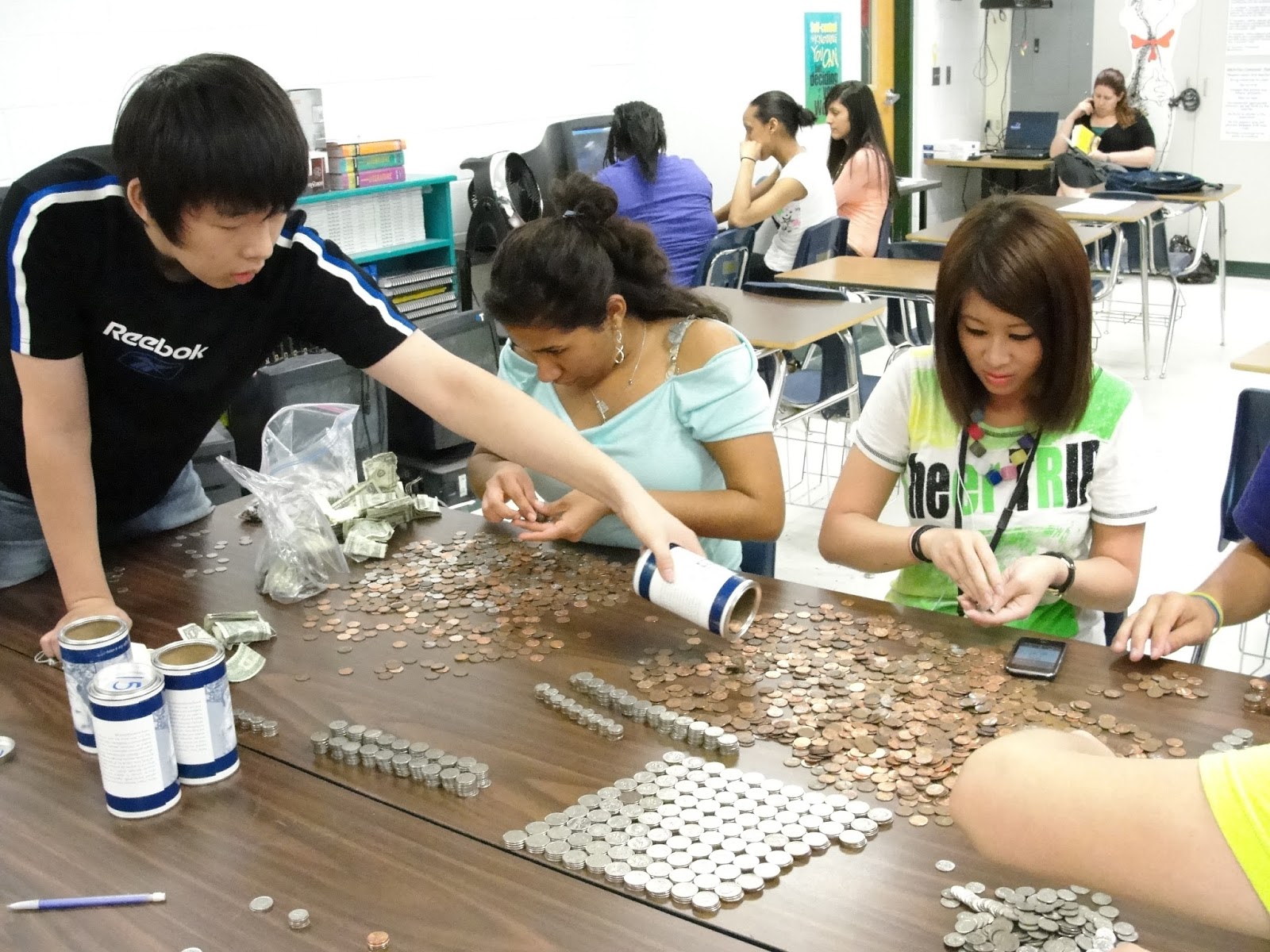
Their momentum carried us from learning about how to become an organ donor to learning which other organs can be successfully transplanted. As students questioned, we expanded our research. The culminating effect that year is that students began to learn why some people need organ donations. And they wanted to do something to help. One young lady challenged her family to begin eating more vegetables and become healthier so that they won’t need organ transplants. Others decided to raise awareness about how to become an organ donor.

Momentum continued and one final project brought all of my classes together in a collaborative effort. Students’ inquiry-based research led them to learn about several diseases such as cystic fibrosis, diabetes, and Duchenne Muscular Dystrophy (DMD). When students read an article about a young boy with DMD and learned it is a fatal childhood disease that affects boys, they wanted to do something. Their ideas flowed.

Students planned, developed, and carried out several events on campus and in the community to raise $1,500.00 dollars toward research for finding a cure. Through a grant proposal, students published a calendar outlining their journey and continuing efforts to raise awareness for their cause. Calendars were sent to principals, counselors, and librarians at each middle school and high school campus in our district.

Instead of focusing on their own challenges, this project provided a platform for students to realize their potential and celebrate their ability to impact the world around them. Participation at this level is empowering.

Curriculums may change and textbooks will come and go, but izzit.org current event updates and educational videos remain a constant in my classroom because they provide opportunities for students to grow and learn together

Monday, September 12, 2016

Book Review - Inventing Freedom by Daniel Hannan (Andy Jobson)

Review – Inventing Freedom by Daniel Hannan

I like to think that one advantage of teaching is that it keeps me reading.  Some people, however, just read widely because they love it. My mother-in-law is one of those people, and she often leads me to some wonderful books. Daniel Hannan’s Inventing Freedom is one of those great finds.

Hannan, a member of the European Parliament, provides an overview of the English-speaking world (which he calls the Anglosphere) that in some ways pays homage to Churchill’s History of the English-Speaking People.  Hannan takes one volume to share his insights instead of four (a bonus for busy teachers) and focuses heavily on the reasons that one island, and its offshoots, created what we think of today as Western Civilization. Those who like to denigrate the value of that civilization will probably hate this book, but those who see the importance of principles like the rule of law, private property, personal liberty, and representative government will find much to appreciate here.   

Here’s a small sample:  “(S)mall businessmen have been the drivers of progress through the centuries.  Societies that laud martial valor, nobility, and faith tend to be less pleasant places to live than societies that value freedom, enterprise, and privacy.  The petit bourgeoisie, whom Marx so despised, have contributed more to human happiness than any number of crusaders.  And they have done so, in the main, unhonored, unthanked, and unnoticed.”  (327)


Daniel Hannan
Like Churchill, Hannan looks far back into the Anglo-Saxon period in England to trace the growth of the principles stated above.  He reminds us Americans of the debt we owe to that nation while arguing that the English colonies that eventually declared independence are perhaps the strongest example of these values. As De Tocqueville said in Democracy in America, “The American is the Englishman left to himself.”  

This does not imply that only those Caucasians of Anglo-Saxon heritage are true Americans—I always try to remind my students that our nation’s citizenship is one of the few based not on ethnicity, but on philosophy.  To be American, I would argue, means to think a certain way.  Sadly, I worry that we’re losing that unique identity as we strive to become more like continental Europe. Hannan reminds us of the value of what we’re so casually throwing away. 


An educator of 22 years, Andy Jobson has taught government, economics, and U.S. History. Currently teaching English literature at Riverside Military Academy in Gainesville, GA, he’s also been an administrator, a STAR teacher twice, and taught elementary school with Teach for America. 

Wednesday, September 7, 2016

The Value of Trade by Andrew Jobson

The Value of Trade

Teaching Economics again gave me the chance to use a fun introductory activity I learned long ago from a GCEE (Georgia Council for Economic Education) workshop.  The goal is to show how trade occurs because people feel that they have gained.  In other words, with voluntary exchange, everyone wins.

You start by preparing a small opaque bag of goodies for each student in the class.  I have typically used candy, but you can use other small items depending on the age of the students (nickels, erasers, pencils, stickers, etc.).  The bags should have some variety, reflecting the disparate resources that we all have.  It’s also okay to give some bags more than others for the same reason, although each should have at least enough to engage in some trade.


After warning the students to keep their contents secret for now, distribute the bags and ask each person to rate his or her satisfaction level with the contents on a scale of 1 to 10. The students should write the number down, although they don’t have to announce it.

I don’t remember if I learned the lesson this way, but I started by putting students in groups of three to compare bags and trade if they were interested.  After a few minutes, I expanded their “market” and let them move around the entire class to see what people had and to offer trades.  (Having recently revisited Smith’s Wealth of Nations, I was thinking about his comments on the value of large markets.)

Following the entire class trading market, the students (at least those who engaged in trade) re-evaluated their satisfaction.  Now we compared their initial rating with their revised rating and discussed the changes.  A few items that we addressed:  1) Why did most people’s satisfaction go up? 2) Do you see any trades that you think were bad trades? Why did they happen?  3) What happened when the market expanded?  How does this relate to world trade today? 4) At least one person traded, not because he valued the items he got in trade, but because he valued the friendship of another student more than the contents of his bag.  This was an interesting scenario which led to a discussion of how “self-interest” occasionally means more than simple economic status.

I know this isn’t original, but it’s fun and helpful to the students.  I love and value reading, but anytime we can get them to do something active (especially at my all-boys school), it’s a good day.  I hope you find it useful.  


Note from Susan Gable (izzit.org Director of Educational Curriculum) – The activity Andy describes here is exactly the activity in our educational video Win/Win – A Trading Game. If you’d like to see a classroom demonstration of the activity to get a better understanding of how to do it, watch the video or select it for your izzit.org Free Annual Video DVD. Additional resources are available with it as well.


An educator of 22 years, Andy Jobson has taught government, economics, and U.S. History. Currently teaching English literature at Riverside Military Academy in Gainesville, GA, he’s also been an administrator, a STAR teacher twice, and taught elementary school with Teach for America. 

Thursday, August 25, 2016

Great Teacher Resources – iCivics.org by Mike Siekkinen

If you’re teaching history, civics, or government, have you heard of iCivics.org? It’s great, and I use it with my students.

iCivics is a non-profit organization dedicated to reinvigorating civic learning through interactive and engaging learning resources. Founded and led by Justice Sandra Day O’Connor, iCivics provides students with the tools they need for active participation and democratic action, and teachers with the materials and support to achieve this. The site has educational games that my students love playing. Games vary from having students take on the role of the President of the United States, making decisions as well as working with all the different departments in Washington, to running a law firm where students match lawyers and clients cases learning the Bill of Rights. There are also games showing what happens during a jury trial and demonstrates how local government works.

The site is free and also has loads of teacher materials. In addition to lesson plans, there’s a section on webquests covering multiple topics. Also available are entire teaching units on multiple subjects as well as access to source documents. There’s a search engine on the site where you can select your state and by standard, icivics will display which games and areas tailor specifically to your state’s standards. I encourage you to check out this free, interactive, fun and informative site that students love. I have been using this for a number of years and my students really enjoy it! It’s also available on multiple platforms (internet, IPAD's, Chromebooks, etc.) so it’s easy to get to no matter what kind of technology your school is using.

If you’ve tried iCivics, what do you think of it?


Dr. Mike Siekkinen, a retired U.S. Navy submariner, became a teacher as a second career. He teaches history at St Marys Middle School as well as Adult and Career Education at Valdosta State in Georgia.

Monday, August 22, 2016

Are You Stressing? – by Lindell Long

Are you stressing? I am not talking about grading deadlines, or extra forms to fill out on every student you have ever worked with, I am taking about stressing or emphasizing your words.

I teach ESOL students who often put the emphasis on the wrong word in a sentence, changing the meaning totally from what was intended. In order to help them realize how this works, I shared this simple exercise with mainstream teachers to help students during their classes.

Here are the same sentences with the same words in the same order, however, in changing the word that is stressed in the sentence, the meaning will be changed.

The sentence is "This is my black cat."

THIS is my black cat. (This cat right here...not that one over there.) This IS my black cat.(Are you doubting me? It is a certainty.) This is MY black cat. (I own this cat...no one else does) This is my BLACK cat. (Not my red cat or my gray cat.) This is my black CAT. (Not my dog or parakeet.)

Simple sentences can be used to show emphasis and what the meaning the speaker is trying to get across. With all of the debates on television, it would be interesting to have students listen to the speeches and see how well the candidates did in emphasizing the proper words.


Lindell Long teaches ESOL at Clover Middle and High Schools in Clover, South Carolina, a position she’s held for the last 18 years. She’s married with 4 children and so many pets her family fears she’ll bring home a stray yak one day.

Thursday, August 18, 2016

Back-To-School Bag Giveaway!!!

Back-To-School Bag Giveaway!!!
(Black tote bag, izzit.org travel mug, izzit.org digital clock/pen holder, izzit.org pens, and a SURPRISE)

2 Ways to Enter:
1. Facebook - Like Us on Facebook and Share the Post.
2. Twitter - Follow Us on Twitter and Share/RT the Post.

For official rules, click here.

**This contest is only for U.S. Residents and expires August 31st, 2016.**

We're selecting (5) Facebook AND (5) Twitter winners randomly.

So hurry, Like, Share, Like and Share....

Wednesday, August 17, 2016

Teaching – My Second Career by Mike Siekkinen

I became a teacher as a second career. As a retired military man, I had the opportunity to teach in the Navy on two separate shore duty assignments. I taught both enlisted and officers on subjects ranging from leadership, procedures to operate complex electronic systems and submarine navigation. Having enjoyed teaching, I thought the next logical step was to teach when retiring from the Navy.


I had a baptism of fire, so to speak, with regards to entering public education. Having completed all of the requirements to become a public school teacher, minus student teaching, I was hired to teach 8th grade history at a nearby middle school. I had high expectations and was excited to begin teaching. I thought with my teaching experience, quick wit and humor (I could always make people laugh), that teaching "kids" would be a breeze. I envisioned the students "flocking" to me and sitting at my feet while I filled their heads with knowledge and they walked away smiling and thanking me. Looking back, I call this my "kumbaya" teaching fantasy.

Real life teaching was not quite like I thought it would be. Many times I thought "What have I gotten myself into?" that first year. But you learn, sometimes by the mistakes that you make. You do have those moments when everything works that you try and before you know it the year is over. It gets easier for most of us and you find your strengths and weakness and what you can do best. Don't be discouraged, most of us "make it out alive!” The second (and then third, fourth, etc.) years are easier and keep getting better!

How did you come to teaching?


Dr. Mike Siekkinen, a retired U.S. Navy submariner, became a teacher as a second career. He teaches history at St Marys Middle School as well as Adult and Career Education at Valdosta State in Georgia.

econlife - Who Will Sacrifice Civil Liberties During a Pandemic? by Elaine Schwartz

  In a new NBER paper, a group of Harvard and Stanford scholars investigated how much of our civil liberties we would trade for better heal...